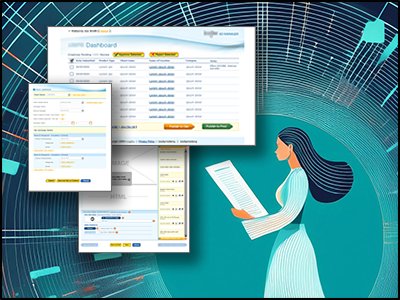
Project Snapshot
- Track every creative asset from initial sale through client approval and publication in one system
- Eliminate paper-based hand-offs and physical file storage entirely
- Support distinct workflows for five user roles without overcomplicating the interface
- Reduce steps for core tasks by more than 50% compared to the existing process
- Build stakeholder alignment across nine participants using a structured UCD process
Delivered a complete application design covering sales agreements, campaign management, asset tracking, approvals, and admin. The redesigned process eliminated all physical hand-offs and set the foundation for an offshore development build.
Process Map as a Design Tool — With five distinct user roles and no shared mental model of the process, I created a detailed current-state process map as the first deliverable — making the pain visible to everyone in the room at once and creating immediate stakeholder alignment on what needed to change.
Research & Insights
I started by tracking the lifecycle of a creative set from inception to client approval — interviewing internal users across every role involved in the process and reviewing the current digital system. The goal was to document every step, both online and offline, before redesigning anything.
Five distinct user roles shaped the system design, each with different needs, permissions, and workflows. Understanding how these roles interacted — and where handoffs between them broke down — was the foundation for every design decision that followed.
Sketches and Task Screens
Sketches
Before any digital wireframing, I worked through the interface on paper — exploring layout ideas quickly without committing to tooling.
Task Screens
I created task screens as a structured mapping of each screen's requirements, colour-coded by process type (creative, system, admin), to make sure every wireframe was grounded in what it actually needed to do.
Wireflows
Wireflows mapped the full interaction sequences for the application's primary use cases — showing how each user role moved through the system from start to finish.
System Map
The system map gave leadership and the offshore development team a complete view of the application's scope — all screens, connections, and role-based access at a glance.
Design Decisions
The design documentation was grounded in user tasks from the start. Rather than designing pages, I designed around jobs-to-be-done — what does each role need to accomplish, and what does the system need to support for that to happen? This task-first approach shaped every architectural decision.
Final Designs
The final visual design established the CMT's four-section layout — Campaigns, Sales Agreements, Creatives, Approvals — with a consistent two-panel pattern throughout. The visual design work grounded the system in the company's existing brand while making the dense information architecture as scannable as possible.